
Trending
This story is from November 19, 2017
Goa’s Technical Legacy To The Indian Film Industry
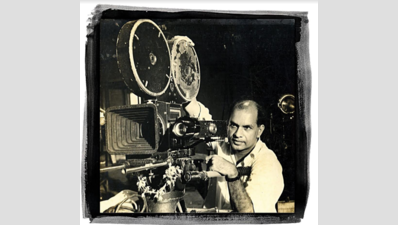
Historical films found a good set/art director in another Goan, Vithal Karekar.
The first acknowledgement must go to film editor par excellence, Waman Bhonsle, who had the distinction of being not only the first Goan, but also the first Indian to receive the National Film Award for best editing award (‘Inkaar’), when the award was first instituted.

An octogenarian today, the Pomburpa-native ruled the roost from the 1960s to the late 1990s, working with some of the biggest names in the industry. Winning several awards over the years, Bhonsle nevertheless remained committed to advancing Indian cinema through innovative editing techniques as he did for the train sequence in ‘Ghulam’.
‘Disciplined, dedicated, with meticulous attention to detail’ are attributes that his award-winning nephew director Dinesh P Bhonsle accords him. “He edited every genre of film and worked with some of the best names in the industry, like Gulzar and Subhash Ghai. He has also worked on debut films of many actors who went on to become big names, such as Jackie Shroff and Sanjay Dutt. In fact, established directors and stars sought him out. He also edited several south Indian films,” says Dinesh.
Terming Bhonsle as a master of fine cuts, writer/director Dharmanand Vernekar, who had the honour of assisting the veteran, highlights three aspects of Bhonsle’s award-winning works. “He had a good technique of doing flashbacks. In this aspect he gelled well with Gulzar to produce some of the finest works. He was also able to keep the tempo of the film crisp and many-a-time was able to camouflage some mistakes made by the
director,” he says.
If Bhonsle aced it on the editing table, the late K Vaikunth (Vaikunth Dattaram Kuncolienkar from Margao) took top honours as an award-winning cinematographer. Starting out with documentaries he graduated to films. “He was an institution by himself,” says Vernekar, who assisted this ace as well. “Young directors/cinematographers often discussed his work and took cues from it. He worked from the black and white era to the colour, from the 1960s to the 1980s, and with award-winning actors and directors like Gulzar, Ramanand Sagar and Ramesh Sippy in blockbusters from ‘Garam Coat’ to ‘Andaz’ and ‘Aandhi’. In fact, a number of Gulzar’s as well as G P Sippy’s masterpieces have been shot by him,” explains Vernekar.
Apparently Vaikunth’s forte lay in his lighting techniques. “In those days there were no monitors and thus one could see the output only after it was printed. Vaikunth had a keen eye for light. His third eye could fully comprehend and conceive what the director had in mind. He had good depth perception. His frames were beautiful with their depths and shadows,” he explains of the cinematographer, who had several silver jubilee hits to his credit.
Having assisted both these veterans as well as Gulzar, Vernekar explains how this famous trio produced some of Indian cinema’s finest masterpieces like ‘Parichay’, ‘Mausam’, ‘Aandhi’, ‘Kushboo’ and ‘Kinara’ among others. “A renowned director/writer, Gulzar worked well with both these Goan stalwarts – Vaikunth as cinematographer and Waman as film editor giving us a number of silver and golden jubilee hits,” he says.
Historical films found a good set/art director in another Goan, Vithal Karekar. Hailing from Ribandar, Karekar was known for his meticulous attention to detail in an era (1960s-1980s) when films were shot entirely in sets. ‘Tipu Sultan’ and ‘Khote Sikkay’ were two such memorable films. Unfortunately, ‘Tipu Sultan’ was his last outing in which he lost his life in the
devastating fire. The Indian film Industry is indeed richer by the immense contribution of the Goan league of film masters.
End of Article
FOLLOW US ON SOCIAL MEDIA






Photostories

Hot Picks
TOP TRENDING
Popular Categories
Hot on the Web
Top Trends
Caleb WilliamsBilkis Bano CaseAnne AllanVince McMahon Netflix DocuseriesIPL Player RetentionHigh Paying Freelance JobsSean CombsIsrael Hezbollah WarNEET UG Paper Leak CaseKerala Lottery ResultsTamil Nadu NEET UG CounsellingTirupati LadduWest Bengal Teacher RecruitmentSoudi Al Nadak IslandParam Rudra SupercomputersKerala Bans Study NotesLive Cricket Score
Trending Topics
Living and entertainment
Copyright © 2024 Bennett, Coleman & Co. Ltd. All rights reserved. For reprint rights: Times Syndication Service